
Silicone Hydrogel vs Hydrogel Contact Lenses: What's the Difference? (Edmonton Guide)
Silicone Hydrogel vs Hydrogel Contact Lenses: What's the Difference? (Edmonton Guide)
Written by the Charm Optical Team • April 7, 2026
- What Are Hydrogel and Silicone Hydrogel Contact Lenses?
- How Oxygen Reaches Your Cornea Through a Contact Lens
- Silicone Hydrogel vs Hydrogel: Side-by-Side Comparison
- Why Lens Material Matters More in Edmonton's Dry Climate
- Popular Brands: Which Material Does Each Use?
- Who Should Wear Silicone Hydrogel? Who Does Better With Hydrogel?
- How Lens Material Connects to Daily vs Monthly Schedules
- Getting Fitted for Contact Lenses in Edmonton
- Cost and Insurance Coverage for Contact Lenses in Alberta
- Ordering Contact Lenses Online and Shipping Across Canada
- Frequently Asked Questions About Contact Lens Materials
If you've ever tried to shop for contact lenses online or compare brands at your optometrist's office, you've probably run into the terms "hydrogel" and "silicone hydrogel." They sound nearly identical. They look the same sitting on your fingertip. But the difference between these two materials is significant, especially if you live somewhere with long winters and dry indoor air.
Choosing the right contact lens material affects how comfortable your lenses feel at hour ten, how much oxygen reaches your cornea, and whether you're at higher risk for irritation. At our optical store in South Edmonton, we fit patients in both materials every day. Here's what you actually need to know to pick the right one.
What Are Hydrogel and Silicone Hydrogel Contact Lenses?
Both hydrogel and silicone hydrogel are soft lens materials. They're flexible, comfortable, and used by the vast majority of contact lens wearers worldwide. The difference comes down to chemistry.
Traditional Hydrogel
Hydrogel lenses were the original soft contact lens material, introduced in the 1970s. They're made from a water-absorbing polymer (typically HEMA, or hydroxyethyl methacrylate) that holds water within the lens structure. That water content is what makes them soft and pliable.
Oxygen passes through hydrogel lenses primarily by dissolving into the water in the lens and diffusing across. More water generally means more oxygen transmission. That's why early hydrogel lenses pushed for higher and higher water content, sometimes reaching 70% or more.
The catch? Higher water content also means the lens dehydrates faster, especially in dry environments. As water evaporates from the lens surface, it pulls moisture from your tear film to replenish itself. That's the reason high-water-content hydrogel lenses can sometimes feel drier by the end of the day than lenses with less water.
Silicone Hydrogel (SiHy)
Silicone hydrogel lenses arrived in the late 1990s and changed the game. They add silicone channels to the hydrogel matrix, creating a second pathway for oxygen. Instead of relying only on water to carry oxygen, silicone lets oxygen pass directly through the solid lens material.
This is the key innovation: silicone hydrogel lenses allow up to five times more oxygen to reach your cornea compared to traditional hydrogel. According to the American Academy of Ophthalmology, this higher oxygen transmissibility (measured as Dk/t) reduces the risk of corneal hypoxia, where the cornea doesn't get enough oxygen and can develop problems over time.
Because SiHy lenses don't depend on water for oxygen transport, they can have lower water content (typically 33-48%) without sacrificing breathability. Lower water content means less evaporation and often better end-of-day comfort in dry conditions.
How Oxygen Reaches Your Cornea Through a Contact Lens
Your cornea is one of the few tissues in your body that doesn't have its own blood supply. It gets oxygen directly from the air, absorbed through your tear film. When you place a contact lens on your eye, that lens becomes a barrier between the air and your cornea.
How well oxygen passes through that barrier is measured by a value called Dk/t (oxygen permeability divided by lens thickness). Higher Dk/t means more oxygen gets through.
- Traditional hydrogel lenses: Dk/t values typically range from 20 to 40
- Silicone hydrogel lenses: Dk/t values range from 80 to 175+
To put this in perspective, the FDA recommends a minimum Dk/t of 24 for daily wear and 87 for extended (overnight) wear. Most hydrogel lenses meet the daily wear threshold but fall short for extended wear. Most silicone hydrogels comfortably exceed both.
Research published in Contact Lens and Anterior Eye has shown that chronic low-oxygen conditions under a contact lens can lead to corneal neovascularization (abnormal blood vessel growth), limbal redness, and corneal swelling. These are typically subclinical, meaning you might not notice symptoms right away, but they accumulate over years of lens wear.
Silicone Hydrogel vs Hydrogel Contact Lenses: Side-by-Side Comparison
Here's a straightforward comparison of the two materials across the features that matter most to contact lens wearers in Edmonton and across Alberta.
| Feature | Traditional Hydrogel | Silicone Hydrogel |
|---|---|---|
| Oxygen transmissibility (Dk/t) | 20–40 | 80–175+ |
| Water content | 38–78% | 33–48% |
| Suitable for overnight wear | Generally no | Some FDA-approved for up to 30 nights |
| End-of-day comfort in dry conditions | Can feel dry; high-water lenses dehydrate | Often better; less dependent on water |
| Deposit resistance | Good (lower lipid deposits) | Varies (silicone can attract lipid deposits) |
| Stiffness / modulus | Very soft and flexible | Slightly stiffer (newer ones much softer) |
| Best for | Sensitive eyes, occasional wear, allergies | Long wear days, dry environments, digital workers |
| Price range | Usually lower | Slightly higher (gap narrowing) |
Neither material is universally "better." The right choice depends on your eyes, your lifestyle, and your wearing schedule. That's exactly what a proper contact lens fitting determines.
Why Breathable Contacts Matter More in Edmonton's Dry Climate
Edmonton's climate creates specific challenges for contact lens wearers. Winter humidity indoors often drops below 20%, and heated air in homes, offices, and cars makes it worse. If you've ever noticed your lenses feeling tight and scratchy by 3 p.m. in January, the air itself is probably the culprit.
Traditional hydrogel lenses with high water content (60%+) are especially susceptible to this. The drier the air, the more water evaporates from the lens surface, and the lens compensates by pulling moisture from your tears. Your eyes feel dry, your vision fluctuates, and by evening, you just want the lenses out.
Silicone hydrogel lenses handle Edmonton winters better for two reasons:
- Lower water content means less evaporation, so the lens stays more stable on your eye throughout the day.
- Oxygen doesn't depend on water, so even as the lens surface dries slightly, your cornea still gets the oxygen it needs.
Patients in neighbourhoods like Ellerslie, Windermere, and Summerside who spend their days in climate-controlled offices and commute through frigid outdoor air tell us this makes a noticeable difference. The transition between the -25°C parking lot and the heated building is where hydrogel lenses tend to protest the most.
Summer in Edmonton brings its own issues. UV exposure increases, wind picks up around the river valley, and anyone spending time at Elk Island or doing yardwork in Sherwood Park faces dust and pollen on top of dry conditions. Silicone hydrogel's durability and oxygen performance hold up well here too.
Popular Contact Lens Brands in Edmonton: Which Material Does Each Use?
Not every contact lens brand advertises its material type on the box in plain language. Here's a breakdown of the most commonly fitted lenses we see at Charm Optical, sorted by material.
| Brand / Lens | Material Type | Material Name | Dk/t | Water Content | Schedule |
|---|---|---|---|---|---|
| Acuvue Oasys | Silicone Hydrogel | Senofilcon A | 147 | 38% | Biweekly |
| Acuvue Oasys 1-Day | Silicone Hydrogel | Senofilcon A | 121 | 38% | Daily |
| Dailies Total1 | Silicone Hydrogel (Water Gradient) | Delefilcon A | 156 | 33% core / 80%+ surface | Daily |
| Biofinity | Silicone Hydrogel | Comfilcon A | 160 | 48% | Monthly |
| Biotrue ONEday | Hydrogel | Nesofilcon A | 42 | 78% | Daily |
| 1-Day Acuvue Moist | Hydrogel | Etafilcon A | 33 | 58% | Daily |
| Air Optix Night & Day Aqua | Silicone Hydrogel | Lotrafilcon A | 175 | 24% | Monthly (up to 30 nights continuous) |
| SofLens Daily Disposable | Hydrogel | Hilafilcon B | 24 | 59% | Daily |
One lens worth highlighting is Dailies Total1 from Alcon. It uses a "water gradient" design that's technically silicone hydrogel at its core (33% water, high oxygen) but transitions to over 80% water at the surface. This gives it the breathability of SiHy with the soft, lubricated feel of a high-water hydrogel. Many patients who found older silicone hydrogels too stiff find Dailies Total1 exceptionally comfortable.
Biotrue ONEday is worth mentioning on the hydrogel side. Its 78% water content matches the water content of the human cornea, and Bausch + Lomb designed it to maintain 98% of its moisture for a full 16 hours. For patients who wear lenses for shorter days or have sensitivities to silicone, it's a strong hydrogel option.
Who Should Wear Silicone Hydrogel? Who Does Better With Hydrogel?
Silicone hydrogel isn't automatically the right choice for everyone. Here's how the decision usually plays out during a contact lens fitting.
Silicone Hydrogel Is Usually the Better Choice If You:
- Wear lenses for 10+ hours a day
- Work at a computer screen most of the day (reduced blink rate = more dryness)
- Live or work in dry, climate-controlled environments (hello, Edmonton office buildings)
- Want the option for occasional overnight wear (only FDA-approved SiHy lenses)
- Have a history of corneal complications from low oxygen
- Are a new wearer looking for the safest long-term option
Traditional Hydrogel Might Be Better If You:
- Have sensitive eyes that react to silicone (rare, but it happens)
- Wear lenses only occasionally or for short periods (under 8 hours)
- Experience lid irritation (giant papillary conjunctivitis) with stiffer SiHy lenses
- Are on a tight budget and wear dailies (hydrogel dailies cost less per box)
- Have specific allergies where a preservative-free hydrogel works best
Your optometrist evaluates your tear film quality, corneal health, and wearing habits before recommending a material. This is one of the reasons a proper contact lens fitting matters so much. What works perfectly for your co-worker in Terwillegar might not suit your eyes at all.
How Lens Material Connects to Daily vs Monthly Schedules
The material of your contact lens and the replacement schedule are two separate decisions, but they interact in important ways.
Daily disposables come in both hydrogel (Biotrue ONEday, 1-Day Acuvue Moist) and silicone hydrogel (Acuvue Oasys 1-Day, Dailies Total1). Since you throw them away each night, deposit buildup and long-term oxygen deprivation are less of a concern. Hydrogel dailies are a perfectly reasonable choice for many wearers.
Biweekly and monthly lenses sit on your eyes for more cumulative hours and accumulate more protein and lipid deposits. Silicone hydrogel's higher oxygen transmission becomes more important here because you're asking your cornea to breathe through the same lens for 14 or 30 days. Acuvue Oasys (biweekly) and Biofinity (monthly) are the two most popular options in this category, and both are silicone hydrogel.
We wrote a detailed comparison of daily vs monthly contact lenses that covers cost, convenience, and eye health considerations beyond just material.
Getting Fitted for Contact Lenses Near Me in Edmonton
A contact lens fitting is different from a standard eye exam. Your optometrist measures your corneal curvature, evaluates your tear film, checks for dry eye, and considers your lifestyle before recommending a specific lens brand and material.
At Charm Optical, a contact lens exam and fitting is $135 CAD and a standard eye exam is $99 CAD (as of July 2026) — the fitting is the appointment that produces a contact lens prescription. We'll have you try on diagnostic lenses in the office so you can feel the difference between materials before committing to a supply.
Here's what happens during a typical fitting:
- Health evaluation: Your optometrist checks for dry eye, allergies, corneal irregularities, and any contraindications for contact lens wear.
- Measurements: Corneal topography and keratometry measure the shape and curve of your cornea. This determines the base curve and diameter of your lens.
- Trial lenses: You'll wear a pair of diagnostic lenses (usually for 15-20 minutes) while the optometrist checks the fit under a slit lamp.
- Material recommendation: Based on your tear film, wearing schedule, and comfort feedback, the optometrist recommends hydrogel or silicone hydrogel, along with a specific brand.
- Follow-up: After wearing the trial lenses for a week, a brief follow-up confirms everything is working well.
Patients from across Edmonton come to our Ellerslie Road location for contact lens fittings. Whether you're near Heritage Valley, Rutherford, or driving down from Mill Woods or Bonnie Doon, we're easy to find just off Ellerslie Road in the south end.
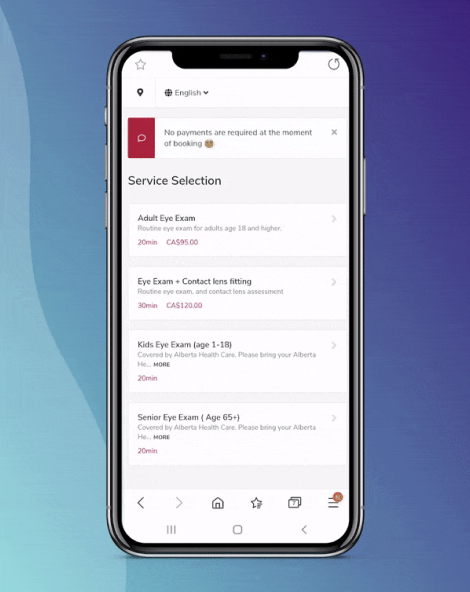
You can book your eye exam and contact lens fitting online at see.charmoptical.ca, or call us at (780) 490-0090.
Cost and Insurance Coverage for Contact Lenses in Edmonton, Alberta
Silicone hydrogel lenses are typically a bit more expensive than hydrogel, though the gap has narrowed considerably over the past few years. For daily disposables, expect to pay roughly $5-15 more per box for SiHy vs hydrogel. For monthly lenses, the difference is often minimal.
Most employer insurance plans in Alberta cover a portion of contact lens costs. At Charm Optical, we offer direct billing to major providers including:
- Alberta Blue Cross
- Canada Life (formerly Great-West Life)
- Desjardins
- AISH
- Alberta Works
Coverage amounts vary by plan, but many plans cover between $150 and $300 toward contact lenses every 12 or 24 months. Some plans cover the contact lens fitting fee separately from the lens supply. We can check your coverage in-store or over the phone before you commit to anything.
Alberta Health Care covers annual eye exams for children under 19 and adults 65+. The exam portion is covered, though the contact lens fitting component may have additional fees depending on the complexity. For children and youth, the American Academy of Ophthalmology recommends regular screenings starting in infancy, with contact lens wear typically starting around age 10-12 depending on maturity.
Ordering Contact Lenses Online and Shipping Across Canada
Once you have a valid contact lens prescription from your optometrist, you can order your supply through Charm Optical and have it shipped anywhere in Canada. We carry all the major brands discussed in this article and can match or beat most online retailer pricing.
If you're in Edmonton, you can pick up your lenses at our store at 5035 Ellerslie Rd SW, Edmonton, AB T6X 1X2. For patients outside Edmonton, we ship contact lenses across the country.
Browse our contact lens collection online, or give us a call at (780) 490-0090 to place an order.
Frequently Asked Questions About Silicone Hydrogel and Hydrogel Contact Lenses
Is silicone hydrogel better than hydrogel?
For most wearers, yes. Silicone hydrogel transmits up to five times more oxygen to the cornea, which is healthier for long-term lens wear. It also tends to resist dehydration better in dry environments like Edmonton's winter. However, some patients with specific sensitivities do better with traditional hydrogel. Your optometrist can determine which material suits your eyes.
Can I sleep in silicone hydrogel contact lenses?
Some silicone hydrogel lenses are FDA-approved for extended wear (up to 6 or 30 consecutive nights, depending on the brand). Air Optix Night & Day Aqua and Acuvue Oasys are two examples. However, sleeping in any contact lens increases the risk of infection, even with high-oxygen materials. Most eye care professionals recommend removing lenses at night whenever possible. Always follow your optometrist's specific instructions.
Why do my contact lenses feel dry by the end of the day in Edmonton?
Edmonton's indoor humidity drops significantly during winter months, and heated air in offices and homes accelerates moisture loss from contact lenses. High-water-content hydrogel lenses are especially prone to this because they lose water to evaporation and compensate by drawing moisture from your tear film. Switching to a silicone hydrogel lens with lower water content, using preservative-free rewetting drops, or trying a daily disposable can all help.
Are silicone hydrogel contacts more expensive?
Slightly, but the price difference has shrunk over the past decade. For daily disposables, you might pay $5-15 more per box compared to a hydrogel equivalent. For biweekly and monthly lenses, the cost difference is often negligible. Many insurance plans in Alberta cover contact lenses, which can offset the difference entirely. At Charm Optical, we offer direct billing to providers like Alberta Blue Cross, Canada Life, and Desjardins.
How do I know which contact lens material I'm currently wearing?
Check your contact lens box or the prescription your optometrist gave you. The material name will be listed (e.g., "senofilcon A" for Acuvue Oasys, or "nesofilcon A" for Biotrue ONEday). If the material name ends in "-filcon A" or similar and contains "si" or mentions silicone in the product literature, it's a silicone hydrogel. You can also ask your optometrist or bring your box to Charm Optical and we'll tell you.
Can I switch from hydrogel to silicone hydrogel without a new fitting?
You'll need at least a brief reassessment. Different materials have different stiffness, base curves, and surface properties, which affect how the lens sits on your eye. Switching without a fitting could lead to poor comfort, blurry vision, or a lens that moves too much or too little. A contact lens fitting at Charm Optical includes trial lenses so you can test the new material before ordering a full supply.
Where can I get a contact lens fitting near me in Edmonton?
Charm Optical offers contact lens exams and fittings for $135 CAD at 5035 Ellerslie Rd SW in South Edmonton, and a standard eye exam is $99 CAD (as of July 2026). We serve patients from Ellerslie, Windermere, Heritage Valley, Summerside, Rutherford, Mill Woods, and across the city. Book online at see.charmoptical.ca or call (780) 490-0090.
Not sure which contact lens material is right for your eyes?
Our optometrist can evaluate your tear film, wearing habits, and lifestyle to recommend the best fit. A standard eye exam is $99 CAD and a contact lens exam and fitting is $135 CAD (as of July 2026).
Charm Optical • 5035 Ellerslie Rd SW, Edmonton, AB • (780) 490-0090