
High-Index Lenses: Are Thinner Lenses Worth the Price? (Edmonton Optician's Guide)
High-Index Lenses: Are Thinner Lenses Worth the Price? (Edmonton Optician's Guide)
Written by the Charm Optical Team • April 7, 2026
- What Are High-Index Lenses?
- How Lens Index Numbers Work (1.50 vs 1.60 vs 1.67 vs 1.74)
- High-Index Lens Comparison Table
- Who Actually Needs High-Index Lenses in Edmonton?
- How Much Thinner Are High-Index Lenses, Really?
- Pros and Cons of High-Index Lenses
- High-Index Progressive Lenses: Worth the Upgrade?
- Coatings That Matter for High-Index Lenses
- Choosing Frames for Strong Prescriptions in Edmonton
- How Much Do High-Index Lenses Cost in Edmonton?
- Insurance and Direct Billing for High-Index Lenses in Edmonton
- High-Index Lenses and Edmonton's Climate
- Getting High-Index Lenses Near Me in South Edmonton
- Shipping Across Canada
- Frequently Asked Questions About High-Index Lenses
If you have a strong prescription, you already know the frustration. Thick, heavy lenses that distort the shape of your eyes. Frames that feel like they're sliding down your nose by noon. That "Coke-bottle" look you've been dealing with since childhood. High-index lenses solve most of these problems by bending light more efficiently, which means less lens material is needed to correct your vision.
But thinner lenses cost more. So the real question is whether the upgrade is worth it for your prescription, your frames, and your budget. We help people make this decision at Charm Optical in South Edmonton every single day, and the answer depends on a few specific factors we'll walk through here.
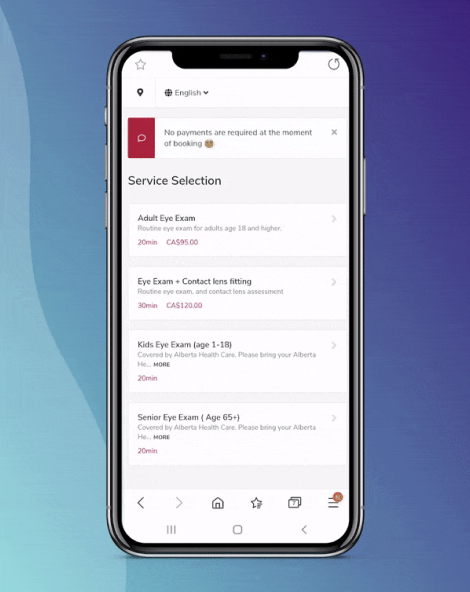
If you already know what you need and want to browse frames, check out our glasses collection. Or book an eye exam at see.charmoptical.ca to get an updated prescription first.
What Are High-Index Lenses?
Every eyeglass lens works by bending (refracting) light to correct how it enters your eye. The "index" in high-index refers to the refractive index of the lens material. A higher number means the material bends light more efficiently. More efficient light-bending means the lens can be made thinner and still deliver the same correction.
Standard plastic lenses have a refractive index of 1.50. That's perfectly fine for mild prescriptions. But once your prescription gets above about +/-4.00, standard lenses start getting noticeably thick and heavy. That's where high-index materials (1.60, 1.67, and 1.74) earn their keep.
According to the American Academy of Ophthalmology, high-index lenses are the standard recommendation for moderate to strong prescriptions because they reduce both thickness and weight compared to conventional plastic.
The trade-off is cost. Higher-index materials require more sophisticated manufacturing, and that premium gets passed along. Whether it's worth it depends entirely on how strong your prescription is and what kind of frames you prefer.
How Lens Index Numbers Work (1.50 vs 1.60 vs 1.67 vs 1.74)
The numbers can seem arbitrary if nobody explains them. Here's the simple version: each jump in index number means the lens material is denser and bends light more sharply. That translates directly to thinner edges (for nearsighted prescriptions) or a thinner centre (for farsighted prescriptions).
1.50 — Standard Plastic (CR-39)
The baseline. Good optical clarity, affordable, and perfectly adequate for prescriptions under +/-2.00. Most people with mild corrections don't need anything beyond this. It's also the material used in our Momono frames starting at $55 for complete single-vision glasses.
1.60 — Mid-Index
About 20% thinner than standard plastic. A solid choice for prescriptions in the +/-2.00 to +/-4.00 range. You'll notice the difference in weight and edge thickness, especially in larger frames. This is the most popular upgrade we sell at our Ellerslie location.
1.67 — High-Index
Roughly 33% thinner than 1.50 lenses. This is where the visual difference becomes dramatic. If your prescription is above +/-4.00, 1.67 lenses make a real difference in how your glasses look and feel. Edges stay slim even in fashionable oversized frames.
1.74 — Ultra-High-Index
The thinnest lens material widely available. About 45% thinner than standard plastic. Reserved for strong prescriptions above +/-8.00, where every fraction of a millimetre matters. These are premium lenses, priced accordingly, but for people who need them, nothing else comes close.
High-Index Lens Comparison Table
This table gives you a side-by-side look at how the four main lens index options compare. We've based the thickness estimates on a -6.00 prescription in a 54mm frame, which is a common scenario we see at our South Edmonton store.
| Feature | 1.50 (Standard) | 1.60 (Mid-Index) | 1.67 (High-Index) | 1.74 (Ultra-High) |
|---|---|---|---|---|
| Thickness Reduction | Baseline | ~20% thinner | ~33% thinner | ~45% thinner |
| Edge Thickness (-6.00, 54mm frame) | ~6.0 mm | ~4.5 mm | ~3.5 mm | ~2.8 mm |
| Weight | Heaviest | Moderate | Light | Lightest |
| Best For Prescription Range | +/-0 to +/-2.00 | +/-2.00 to +/-4.00 | +/-4.00 to +/-8.00 | +/-8.00 and above |
| UV Protection | Requires coating | Built-in | Built-in | Built-in |
| Abbe Value (Clarity) | 58 (best) | 42 | 32 | 33 |
| Reflectivity | Low | Moderate | Higher | Highest (AR coating recommended) |
| Impact Resistance | Good | Good | Moderate | Lower (not for sports) |
| Relative Cost | $ | $$ | $$$ | $$$$ |
One thing the table highlights: the Abbe value drops as the index goes up. Abbe value measures how well a lens resists chromatic aberration (colour fringing around objects). Standard 1.50 lenses score highest here. In practice, most people don't notice colour fringing with 1.67 lenses. With 1.74, some people notice slight fringing in their peripheral vision, particularly under bright or fluorescent lighting. Anti-reflective coating helps significantly.
Who Actually Needs High-Index Lenses in Edmonton?
Not everyone benefits equally from high-index lenses. We see a lot of customers at our Ellerslie store who've been told they "should" upgrade but don't really need to. Here's an honest breakdown.
| Your Situation | Recommended Index | Why |
|---|---|---|
| Prescription under +/-2.00 | 1.50 | Standard lenses will be thin enough. Save your money. |
| Prescription +/-2.00 to +/-4.00 | 1.60 | Noticeable improvement in thickness, especially in larger frames. |
| Prescription +/-4.00 to +/-8.00 | 1.67 | Significant difference. Most people in this range choose 1.67. |
| Prescription above +/-8.00 | 1.74 | Strong prescriptions need the thinnest option available. |
| Want rimless or semi-rimless frames | 1.67+ | Thinner edges look better exposed. Thick edges in rimless glasses are distracting. |
| Children with strong prescriptions | 1.67 | Lighter lenses reduce nose pressure. Kids also benefit from polycarbonate for impact resistance. |
| Sensitive to weight on nose/ears | 1.60+ | Even a small weight reduction matters if you wear glasses 14+ hours a day. |
The key threshold is +/-4.00. Below that, high-index lenses are a nice-to-have. Above it, they're a meaningful quality-of-life improvement. If your prescription is -6.00 or stronger, the difference between standard and high-index is immediately visible when you hold the two lenses side by side.
How Much Thinner Are High-Index Lenses, Really?
Numbers on a spec sheet are one thing. Seeing the lenses in person is another. Here's what the difference looks like in practical terms for someone with a -6.00 prescription in a medium-sized frame (about 54mm wide).
With standard 1.50 lenses, the edges will be about 6mm thick. That's noticeably chunky. The lenses will protrude visibly from the front and back of most frames. Your eyes will look smaller than they actually are (the "minification" effect that strong minus prescriptions cause).
With 1.67 high-index lenses, those same edges drop to about 3.5mm. The lenses sit much more flush within the frame. The minification effect is reduced (though not eliminated). The glasses feel lighter on your face, and they look more proportional.
With 1.74 ultra-high-index, you're looking at about 2.8mm edges. For someone who's worn thick lenses their entire life, trying on a pair of 1.74s for the first time is genuinely eye-opening. We see that reaction regularly at our store.
For farsighted (plus) prescriptions, the thickness issue is different. Instead of thick edges, you get a thick centre. The lens bulges outward, making your eyes appear magnified. High-index lenses reduce this centre thickness and minimize the magnification effect. The improvement is just as dramatic, sometimes more so, because the centre of the lens is what people see first when they look at you.
Pros and Cons of High-Index Lenses
No lens material is perfect for every situation. Here's an honest assessment.
Advantages
- Thinner profile: The primary benefit. Less lens material means a slimmer, more attractive look.
- Lighter weight: Less material also means less weight on your nose and ears. This matters enormously for all-day wear.
- Better aesthetics: Reduced eye distortion (minification for minus, magnification for plus prescriptions). Your eyes look more natural behind the lenses.
- Built-in UV protection: 1.60 and above block ultraviolet light without needing a separate UV coating.
- More frame options: Strong prescriptions in standard lenses limit your frame choices. High-index opens up larger, rimless, and fashion-forward styles.
Disadvantages
- Higher cost: The most significant downside. 1.74 lenses can cost 3-4 times more than standard plastic.
- More reflective: Higher-index materials reflect more light. Anti-reflective (AR) coating is essentially mandatory, which adds to the cost.
- Lower Abbe value: Slightly more chromatic aberration (colour fringing) in peripheral vision. Most people don't notice it, but it's measurable.
- Less impact-resistant: High-index materials are more brittle than polycarbonate or standard plastic. Not ideal for sports or children's glasses (polycarbonate or Trivex are better for those uses).
- Not necessary for everyone: If your prescription is under +/-2.00, you're paying extra for a difference you likely won't notice.
The American Academy of Ophthalmology notes that high-index lenses are most beneficial when the prescription power exceeds +/-4.00 diopters. Below that threshold, the thickness difference is modest enough that most people are happy with standard or mid-index options.
High-Index Progressive Lenses: Worth the Upgrade?
If you wear progressive lenses (multifocals that correct distance, intermediate, and reading vision in a single lens), high-index becomes even more relevant. Progressive lenses are already thicker than single-vision lenses because they incorporate multiple prescriptions into one lens surface. Adding a strong distance or reading prescription on top of that can make standard progressives uncomfortably heavy.
We wrote a detailed guide on progressive lenses vs bifocals that covers how these lenses work. The short version: if your progressive prescription includes a distance component above +/-4.00, upgrading to 1.67 high-index progressives makes a noticeable difference in comfort and appearance.
High-index progressive lenses from Charm Optical start at $350 for the complete package (frame + lenses). That includes your choice of frame, high-index progressive lenses, and anti-reflective coating. We carry progressives from trusted labs that specialize in digital freeform designs, which provide wider intermediate and reading zones than conventional progressives.
For patients in the Windermere, Summerside, and Heritage Valley areas, our Ellerslie store is a convenient stop for progressive lens fittings. Getting measured in person is especially important for progressives because the optical centres, pupillary distance, and segment height all need to be precise.
Coatings That Matter for High-Index Lenses
High-index lenses reflect more light than standard plastic. Without coatings, you'll see distracting reflections on the lens surface and other people will see glare bouncing off your glasses instead of your eyes. Here are the coatings worth considering.
Anti-Reflective (AR) Coating
This is non-negotiable for high-index lenses. AR coating eliminates surface reflections, improves visual clarity (especially for night driving), and makes your lenses nearly invisible. Every high-index lens we sell at Charm Optical includes AR coating because the lenses simply don't perform properly without it.
Blue Light Filtering
If you spend hours in front of screens (and who in Edmonton doesn't, especially during our long winters), blue light filtering reduces eye strain and fatigue. We have a full page on blue light lenses if you want the details. This can be added to any high-index lens.
Scratch-Resistant Coating
High-index materials are slightly softer than polycarbonate, so scratch protection is more important. Most quality high-index lenses come with scratch-resistant coating included. If yours doesn't, add it.
Hydrophobic and Oleophobic Coating
Repels water and fingerprints. Makes cleaning easier. A small upgrade that's worth it for the daily convenience, especially in Edmonton where you're constantly going between cold outdoor air and warm indoor environments. The temperature change causes condensation, and hydrophobic coating helps your lenses clear faster.
Choosing Frames for Strong Prescriptions in Edmonton
The frame you choose has a massive impact on how thick your lenses end up, regardless of the index. A few rules of thumb that our opticians share with customers every day.
Go Smaller
Lens thickness increases with frame size. A 50mm lens opening will produce thinner lenses than a 58mm lens opening, even with identical prescriptions and materials. This doesn't mean you're stuck with tiny frames. Even dropping from 56mm to 52mm makes a visible difference.
Consider Rounder Shapes
Round or oval frames distribute lens thickness more evenly than rectangular shapes. With rectangular frames, the corners tend to be the thickest points. Round frames eliminate those thick corners entirely.
Avoid Rimless With Standard Lenses
Rimless and semi-rimless frames expose the full edge of the lens. If your prescription is above +/-3.00 and you're using standard 1.50 lenses, those edges will be prominently visible. Upgrade to at least 1.60 if you want rimless or semi-rimless styles.
We carry frames from Ray-Ban, Oakley, Gucci, Calvin Klein, Maui Jim, Burberry, Persol, Polo Ralph Lauren, and more. Our opticians can help you find styles that complement strong prescriptions. Browse the full selection in our glasses collection or come try them on at our Ellerslie location at 5035 Ellerslie Rd SW, Edmonton, AB T6X 1X2.
How Much Do High-Index Lenses Cost in Edmonton?
Lens pricing in Edmonton varies significantly between optical stores, especially for high-index options. Some places charge $400+ for high-index lenses alone (no frame). Here's what you'll pay at Charm Optical, including the frame.
Single Vision Pricing (Frame + Lenses)
- Momono frames with standard 1.50 lenses: Starting at $55 complete
- Single vision with mid-index (1.60) lenses: Starting at $99 complete
- Single vision with high-index (1.67) lenses: Custom quote (depends on frame choice)
- Single vision with ultra-high-index (1.74) lenses: Custom quote (depends on frame choice)
Progressive Pricing (Frame + Lenses)
- Progressive lenses (standard or high-index): Starting at $350 complete
- Premium digital freeform progressives: Starting at $500 complete
These prices include the frame, lenses, and basic coatings (anti-reflective and scratch-resistant). Blue light filtering and other premium coatings are available as add-ons. We're transparent about pricing. No hidden fees, no surprise charges when you pick up your glasses.
For people in Rutherford, Callaghan, and the greater South Edmonton area, our prices are consistently lower than most optical chains. We're able to do this because we source lenses directly from our lab partners and keep our overhead manageable as an independent store.
Insurance and Direct Billing for High-Index Lenses in Edmonton
High-index lenses are covered under the "lenses" portion of most vision insurance plans in Alberta. The amount of coverage depends on your specific plan, but the lens upgrade from standard to high-index is typically an eligible expense.
We do direct billing with the following providers, which means you pay only your portion at checkout:
- Alberta Blue Cross
- Canada Life (formerly Great-West Life)
- Desjardins
- AISH
- Alberta Works
If your plan covers glasses every 24 months (the most common benefit cycle in Alberta), your coverage applies to the full cost of the glasses including high-index lens upgrades. Many Alberta Blue Cross plans, for example, cover $300-$500 toward glasses, which can offset most or all of the high-index premium.
Not sure what your plan covers? Bring your insurance card to our store and we'll check your coverage on the spot. Or call us at (780) 490-0090 and we can often verify your benefits over the phone.
Alberta Health Care covers annual eye exams for children under 19 and adults 65+. The exam itself is separate from the glasses purchase, but getting your prescription updated before ordering new high-index lenses is always a good idea. Book an exam at see.charmoptical.ca.
High-Index Lenses and Edmonton's Climate
Edmonton's weather creates specific challenges for eyeglass wearers that aren't an issue in milder climates. High-index lenses handle some of these challenges better than standard options.
Winter: Fog, Cold, and Indoor-Outdoor Transitions
Walking into a heated building from -30°C outside means instant fog on your lenses. This happens with every lens material, but high-index lenses paired with a good AR coating (especially hydrophobic AR) clear up faster. The smoother surface sheds moisture more quickly than uncoated standard lenses.
Edmonton winters also mean shorter days and more nighttime driving. High-index lenses with AR coating reduce the glare from oncoming headlights and streetlights. If you're driving home from work in the dark from November through February, this matters.
Summer: UV Protection Built In
Edmonton gets serious UV exposure during the long summer days. High-index lenses (1.60 and above) block 100% of UV light without needing a separate UV coating. Standard 1.50 CR-39 lenses need a UV coating added. If you're spending time at Hawrelak Park, walking the river valley, or cycling the trails in the Terwillegar area, your high-index lenses are already protecting your eyes from UV damage.
For dedicated sun protection, you might also want a pair of prescription sunglasses. We can make high-index sunglasses with polarized lenses for the Alberta sun.
Getting High-Index Lenses Near Me in South Edmonton
If you're searching for high-index lenses near me or thin lenses Edmonton, our store is at 5035 Ellerslie Rd SW, Edmonton, AB T6X 1X2. We're in the Ellerslie area of South Edmonton, easily accessible from Windermere, Summerside, Heritage Valley, Rutherford, Callaghan, and Walker.
The process for ordering high-index lenses is straightforward:
- Bring your prescription (or book an eye exam with us at see.charmoptical.ca).
- Choose your frame from our in-store collection (Ray-Ban, Oakley, Gucci, Maui Jim, and many more).
- Our optician will recommend the right index based on your prescription strength, frame size, and lifestyle.
- We handle the rest — lens ordering, fitting, and adjustments.
Turnaround time for high-index single vision lenses is typically 5-7 business days. High-index progressives may take 7-10 days depending on the lab and lens design. Standard single vision lenses in 1.50 are often available same-day.
Our hours are Monday through Friday, 11 am to 7 pm, and Saturday 11 am to 5 pm. Give us a call at (780) 490-0090 if you have questions before visiting.
Shipping Across Canada
Can't make it to our Edmonton store? We ship prescription glasses with high-index lenses anywhere in Canada. Browse frames in our online glasses collection, and we'll work with you remotely to finalize your prescription details and lens options.
Customers in Calgary, Red Deer, Fort McMurray, and across Alberta regularly order from us. We also ship to British Columbia, Saskatchewan, Manitoba, Ontario, and all other provinces. Prescription verification and lens recommendations are handled over the phone or by email.
Frequently Asked Questions About High-Index Lenses
Are high-index lenses worth the extra cost?
For prescriptions above +/-4.00, yes. The difference in thickness, weight, and appearance is significant enough that most people consider it money well spent. For mild prescriptions under +/-2.00, standard lenses are usually fine and the upgrade isn't necessary. The sweet spot where high-index becomes clearly worthwhile is around -4.00 to -6.00, where standard lenses start getting noticeably thick.
Do high-index lenses scratch more easily?
High-index materials are slightly softer than polycarbonate, so they can be more prone to scratching without a protective coating. Every pair of high-index lenses we sell at Charm Optical includes scratch-resistant coating. With proper care (using a microfibre cloth, storing them in a case), high-index lenses last just as long as standard ones.
Can I get high-index lenses in any frame?
Yes, high-index lenses can be cut to fit virtually any frame shape and size. However, the frame choice affects how thin the final result looks. Smaller, rounder frames produce the thinnest results. Large rectangular frames will still be thinner with high-index than with standard lenses, but the difference is less dramatic at the corners.
What's the difference between high-index and polycarbonate lenses?
Polycarbonate lenses (index 1.59) are prized for impact resistance, making them the go-to choice for children's glasses, safety eyewear, and sports glasses. High-index lenses (1.67 and 1.74) are thinner and lighter than polycarbonate but less impact-resistant. If your priority is thinness and cosmetic appearance, choose high-index. If your priority is durability and safety, choose polycarbonate. The American Academy of Ophthalmology recommends polycarbonate for children and anyone involved in sports or high-risk activities.
How long does it take to get high-index lenses in Edmonton?
At Charm Optical, single vision high-index lenses typically take 5-7 business days. High-index progressives take 7-10 business days. Standard 1.50 single vision lenses can often be done same-day. Rush options may be available depending on the lab schedule.
Are high-index lenses covered by insurance in Alberta?
Yes. High-index lenses fall under the "lenses" category in most vision benefit plans. Alberta Blue Cross, Canada Life (formerly Great-West Life), Desjardins, AISH, and Alberta Works all cover lenses including high-index upgrades, up to your plan's maximum. We direct bill all of these providers at our Ellerslie store. Not sure about your coverage? Call us at (780) 490-0090.
Can children wear high-index lenses?
Children can wear high-index lenses, and for kids with strong prescriptions, the reduced weight is genuinely helpful. However, the AAO recommends polycarbonate or Trivex lenses for children because of their superior impact resistance. If weight is a major concern and the child isn't playing contact sports, 1.67 high-index with a scratch-resistant coating can be a good middle ground. We'll help you weigh the options based on your child's age and activity level.
Ready to See the Difference?
Whether you're upgrading from thick lenses or ordering your first pair with a strong prescription, our opticians can show you exactly how much thinner your lenses can be. Come see us at 5035 Ellerslie Rd SW, Edmonton, or book an eye exam online.
Book an Eye Exam Browse Glasses
Or give us a call at (780) 490-0090