
Children's Eye Exams in Alberta: When to Start and What's Covered (Edmonton Parent's Guide)
Children's Eye Exams in Alberta: When to Start and What's Covered (Edmonton Parent's Guide)
If you're an Edmonton parent wondering when your child should get their first eye exam, you're not alone. We hear this question almost daily at Charm Optical. The answer might surprise you: the Canadian Association of Optometrists recommends a first eye exam between 6 and 9 months of age. That's much earlier than most parents expect.
Here's the good news. Alberta Health covers annual eye exams for all children under 19 at no cost to you. Your child can have a comprehensive exam every single year, fully covered, from infancy through their last year of high school. No insurance card needed, no copay, no paperwork beyond your Alberta health care card.
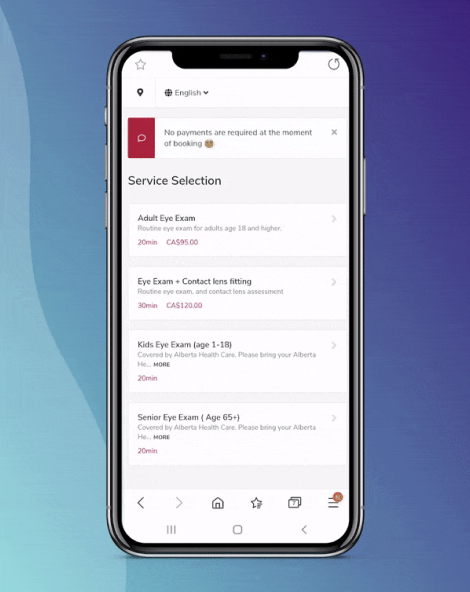
Whether you live in Ellerslie, Summerside, Windermere, Walker, or anywhere else in the Edmonton area, this guide walks you through the recommended exam schedule, what each exam involves, signs that your child might need glasses, and how coverage works. If you'd like to book a kids eye exam in Edmonton, you can do so online at see.charmoptical.ca or call us at (780) 490-0090. We're at 5035 Ellerslie Rd SW, Edmonton, AB T6X 1X2.
What's in This Guide
- Why Early Eye Exams Matter for Children
- Recommended Eye Exam Schedule by Age (Table)
- What Happens at a Baby's First Eye Exam?
- School-Age Eye Exams in Edmonton: What to Expect
- Signs Your Child Might Need Glasses (Table)
- Alberta Health Coverage for Children's Eye Exams
- Insurance and Direct Billing for Kids' Glasses in Edmonton
- Back-to-School Eye Exams: Timing and Tips
- Children's Eye Exams Near Me in Edmonton
- Common Children's Vision Problems
- Frequently Asked Questions
Why Early Eye Exams Matter More Than You Think
Children don't know what "normal" vision looks like. A child who has always seen the world blurry assumes that's how everyone sees. They won't complain about it because they have nothing to compare it to. That's why waiting for your child to say "I can't see" is not a reliable strategy.
According to the Canadian Association of Optometrists, undetected vision problems are one of the most common issues affecting children's learning. Roughly 80% of what a child learns in school is visual. Reading, writing, math, playing sports, even social skills all depend on clear, comfortable vision.
There's also a critical window. Certain conditions like amblyopia (lazy eye) and strabismus (crossed eyes) respond best to treatment when caught early, ideally before age 7. After that window closes, treatment becomes harder and outcomes are less predictable. A simple pair of glasses or a patching program at age 4 can prevent a lifelong vision problem.
Vision screenings at school or the paediatrician's office are helpful but limited. They typically test distance vision only, using a basic letter chart. A comprehensive eye exam checks near vision, eye coordination, focusing ability, eye health, and more. The American Academy of Ophthalmology notes that screenings miss up to 75% of vision problems in children.
Recommended Eye Exam Schedule by Age in Edmonton
The Canadian Association of Optometrists has clear guidelines on when children should be examined. Alberta Health covers all of these exams for children under 19, so there's no reason to skip or delay.
| Age | Recommended Exam | What's Tested | Alberta Health Covered? |
|---|---|---|---|
| 6 to 9 months | First comprehensive exam | Eye alignment, pupil response, focusing ability, overall eye health | Yes — fully covered |
| 2 to 5 years | At least one exam before starting school | Visual acuity, binocular vision, colour vision, eye coordination | Yes — fully covered |
| 6 to 18 years | Annual exam every year | Refraction (glasses prescription), eye health, focusing, tracking, peripheral vision | Yes — fully covered |
The pattern is straightforward: first exam as an infant, at least one before kindergarten, then every year once school starts. Many parents in South Edmonton bring their children in during August or early September as part of back-to-school prep, and that's a smart approach.
What Happens at a Baby's First Eye Exam?
We get it. The idea of an eye exam for a 6-month-old sounds a bit unusual. Your baby can't read letters or tell the optometrist which lens looks clearer. But infant eye exams don't require any verbal responses at all.
The optometrist uses specialized tools and techniques designed for pre-verbal children:
- Retinoscopy: A light is shone into the eye, and the optometrist watches how it reflects off the retina. This determines whether your baby is significantly nearsighted, farsighted, or has astigmatism.
- Pupil response: Checking that both pupils react normally to light, which indicates healthy nerve function.
- Eye tracking: Using a toy or small light, the optometrist watches whether both eyes move together smoothly. Poor tracking can indicate strabismus.
- Preferential looking: Babies naturally look at detailed patterns over plain surfaces. By showing cards with increasingly fine stripes, the optometrist estimates visual acuity.
The whole exam takes about 15 to 20 minutes. Most babies do surprisingly well. Bring a favourite toy and try to schedule the appointment when your baby is usually alert and fed (not nap time).
School-Age Eye Exams in Edmonton: What Parents Should Know
Once your child starts school, annual eye exams become especially important. Their visual demands increase dramatically. They're reading from a whiteboard, working on tablets, copying notes, playing sports outside, and spending more time on screens.
A school-age eye exam at Charm Optical typically includes:
- Visual acuity testing for both distance and near vision
- Refraction to determine if glasses are needed (or if a prescription has changed)
- Binocular vision assessment to check how well both eyes work together
- Colour vision testing (especially important in early grades)
- Eye health examination using a slit lamp and ophthalmoscope
- Discussion of screen time habits and visual hygiene
Children's prescriptions can change quickly, especially between ages 8 and 16. A child who didn't need glasses last year might need them now. That's why annual exams matter, and why Alberta covers them every year until your child turns 19.
Parents in Heritage Valley and Allard often combine eye exams with other back-to-school errands. We recommend booking a few weeks before school starts, since August gets busy.
Signs Your Child Might Need Glasses
Children rarely say "everything looks blurry." Instead, they show you through their behaviour. Here are the signs to watch for, organized by how common they are:
| Sign | What It Could Mean | How Urgent? |
|---|---|---|
| Squinting or closing one eye to see | Refractive error (nearsightedness, farsightedness, astigmatism) | Book within a few weeks |
| Sitting very close to the TV or holding books close | Myopia (nearsightedness) | Book within a few weeks |
| Frequent headaches, especially after reading | Farsightedness or focusing problems | Book within a week |
| Losing place while reading or using a finger to track | Eye tracking or convergence issue | Book within a few weeks |
| One eye turning in or out | Strabismus (crossed or wandering eye) | Book as soon as possible |
| Tilting head to one side consistently | Astigmatism or muscle imbalance | Book within a few weeks |
| Excessive eye rubbing (when not tired) | Eye strain, allergies, or focusing difficulty | Book within a month |
| Avoiding reading or close-up activities | Farsightedness or convergence insufficiency | Book within a few weeks |
| Complaining that words are "jumping" or "moving" | Binocular vision problem | Book within a week |
| Declining grades with no obvious cause | Could be vision-related — worth ruling out | Book within a month |
If you notice any of these signs, don't wait for the next school-year exam. Book an appointment so we can check things out. Many of these issues are easy to correct once identified.
Alberta Health Coverage for Children's Eye Exams — What's Free?
Alberta has one of the best provincial coverage programs for children's eye exams in Canada. Here's exactly what's covered:
- Who's covered: All Alberta residents under 19 years old with a valid Alberta Health Care Insurance Plan card
- What's covered: One comprehensive eye exam per year (12-month period)
- Cost to you: $0 for the exam itself
- Where: Any optometrist in Alberta who bills Alberta Health (which includes Charm Optical)
You don't need a referral from your family doctor, and you don't need private insurance. Just bring your child's Alberta health care card. The optometrist bills Alberta Health directly.
A few things that are not covered by Alberta Health:
- Glasses frames and lenses (these come from private insurance or out-of-pocket)
- Contact lenses
- Specialty tests that go beyond a standard comprehensive exam (e.g., retinal imaging)
- Eye exams for adults 19 to 64 without a medical condition ($99 at Charm Optical)
Alberta Health also covers annual exams for seniors 65 and over and for anyone with certain medical conditions like diabetes or glaucoma, regardless of age.
Insurance and Direct Billing for Kids' Glasses in Edmonton
While the eye exam itself is free for children, glasses are an additional expense. The good news is that most employer benefits plans include coverage for children's eyewear. At Charm Optical, we direct bill the following providers so you don't have to pay upfront and wait for reimbursement:
- Alberta Blue Cross
- Canada Life (formerly Great-West Life)
- Desjardins Insurance
- AISH (Assured Income for the Severely Handicapped) — covers frames and lenses for dependants
- Alberta Works — covers basic frames and lenses for eligible families
Coverage amounts vary by plan, but most private plans cover $150 to $400 per child every 12 to 24 months for frames and lenses. Some plans also cover a percentage of lens upgrades like scratch-resistant or blue-light coatings.
If you're not sure what your plan covers, bring your benefits card when you visit. We can look it up and tell you exactly what's covered before you pick out frames. No surprises at the register.
Back-to-School Eye Exams in Edmonton: Get Ahead of the Rush
August and early September are the busiest times for children's eye exams in Edmonton. Every parent has the same idea, which means wait times for appointments go up significantly.
Here are a few timing tips from our team:
Book in June or July. If your child's last exam was the previous fall, they're due anyway. Booking before summer break means shorter wait times, more appointment slots, and plenty of time to order glasses if needed.
Allow 7 to 10 days for glasses. If your child needs a new prescription or their first pair, lenses take about a week to cut and fit. Booking the exam for mid-August and needing glasses by September 1 can be tight.
Don't skip the exam just because they "see fine." Children compensate remarkably well. A child with moderate farsightedness might have perfect distance vision but struggle with reading fatigue. Only a comprehensive exam catches this.
Families in Rutherford, Callaghan, and across South Edmonton often book their children's exams alongside their own. Adults 19 to 64 pay $99 for a comprehensive exam at Charm Optical, so it's efficient to bring the whole family in one trip.
Children's Eye Exams Near Me in Edmonton
Charm Optical is located at 5035 Ellerslie Rd SW, Edmonton, AB T6X 1X2, right in the heart of the Ellerslie area. We're easy to find if you're coming from Heritage Valley, Summerside, Walker, Windermere, or anywhere in South Edmonton.
Our team is experienced with children of all ages, from infants through teenagers. We keep the environment relaxed and friendly because we know that a child who feels comfortable gives better responses during testing.
To book a children's eye exam:
- Online: see.charmoptical.ca
- Phone: (780) 490-0090
- Walk in: We can sometimes accommodate same-day appointments when the doctor is in, but booking ahead is recommended for children's exams
If your child needs glasses, we carry a wide range of frames including Ray-Ban, Oakley, and other durable brands that hold up to the realities of being a kid. We'll help you pick something they'll actually want to wear, which makes all the difference in compliance.
Common Children's Vision Problems Explained
Understanding the most common conditions helps you know what the optometrist is looking for and why treatment matters.
Myopia (Nearsightedness)
Myopia is the most common vision problem in children and it's increasing globally. A myopic child sees near objects clearly but distant objects appear blurry. The condition typically develops between ages 6 and 14 and often progresses until the late teens or early twenties.
Correction is straightforward: glasses, and later potentially contact lenses. There's growing evidence that myopia management strategies — including specific lens designs and increased outdoor time — can slow progression in children. This is worth discussing with your optometrist if your child's prescription is increasing each year.
Hyperopia (Farsightedness)
Some degree of farsightedness is normal in young children and often resolves on its own. But moderate to high hyperopia forces the eyes to work harder to focus, leading to headaches, reading avoidance, and eye strain. Glasses correct this easily.
Astigmatism
Astigmatism means the eye's surface is shaped more like a football than a basketball, causing blurred vision at all distances. It's very common and easily corrected with glasses. Most children with astigmatism don't realize their vision is blurry because it's all they've known.
Amblyopia (Lazy Eye)
Amblyopia occurs when one eye doesn't develop normal visual acuity, usually because it's significantly more farsighted or nearsighted than the other eye. The brain starts to favour the stronger eye and essentially ignores input from the weaker one. Early detection is critical. Treatment with glasses, patching, or eye drops is most effective before age 7, though improvements are possible later.
Strabismus (Eye Turn)
Strabismus is a misalignment of the eyes — one eye turns in, out, up, or down while the other looks straight. It can be constant or intermittent. Treatment options include glasses, vision therapy, and in some cases surgery. Early intervention produces the best outcomes.
Convergence Insufficiency
This is a common but often overlooked condition where the eyes struggle to turn inward together for close work. Symptoms include double vision while reading, losing place on the page, and headaches after homework. It doesn't show up on a basic school screening but is easily detected during a comprehensive eye exam.
Frequently Asked Questions About Children's Eye Exams in Alberta
Are eye exams free for kids in Alberta?
Yes. Alberta Health covers one comprehensive eye exam per year for all residents under 19. You pay nothing for the exam. Just bring your child's Alberta health care card. Glasses and contact lenses are not covered under this program but may be covered by your private insurance.
When should a child get their first eye exam?
The Canadian Association of Optometrists recommends a first eye exam between 6 and 9 months of age. This early exam checks for eye alignment, focusing ability, and overall eye health. Many parents don't realize exams are recommended this early. Your baby doesn't need to know their letters — the optometrist uses specialized tools designed for infants.
How often should children get eye exams in Alberta?
After the initial infant exam and a pre-school exam (between ages 2 and 5), children should have an eye exam every year from age 6 through 18. All of these annual exams are covered by Alberta Health at no cost. Prescriptions can change quickly during school years, so annual exams are important even if your child isn't complaining about their vision.
Can I book a children's eye exam without a doctor's referral?
Absolutely. In Alberta, you do not need a referral from your family doctor or paediatrician to see an optometrist. You can book directly. At Charm Optical, you can book online at see.charmoptical.ca or call (780) 490-0090.
What's the difference between a vision screening and an eye exam?
A vision screening — the kind done at school or the paediatrician's office — is a quick check that typically only tests distance vision. It catches obvious problems but misses many conditions like farsightedness, convergence issues, and early eye disease. A comprehensive eye exam performed by an optometrist is much more thorough, testing visual acuity, eye coordination, focusing, colour vision, and internal eye health. The American Academy of Ophthalmology notes that screenings can miss up to 75% of vision problems.
My child passed their school vision screening. Do they still need an eye exam?
Yes. Passing a school screening means your child can probably see the board from a reasonable distance. It does not mean their eyes are healthy, that they can focus comfortably for reading, or that both eyes work together properly. Think of a school screening like a basic temperature check versus a full physical — it catches the obvious but misses a lot.
How much does a children's eye exam cost at Charm Optical?
For children under 19, the exam is fully covered by Alberta Health at no cost. For adults aged 19 to 64, a comprehensive eye exam is $99. Seniors 65 and over are covered by Alberta Health again.
Does Charm Optical direct bill insurance for kids' glasses?
Yes. We direct bill Alberta Blue Cross, Canada Life (formerly Great-West Life), Desjardins, AISH, and Alberta Works. If your child needs glasses after their exam, we can check your coverage and bill your insurance directly so you only pay any remaining balance out of pocket.
Have more questions about your child's vision? Our team at Charm Optical is always happy to help. Come see us at our Ellerslie location, book online, or give us a call at (780) 490-0090.
Written by the Charm Optical Team. Last updated April 2026. Information about Alberta Health coverage is current as of the date of publication and may change. Always confirm coverage details with Alberta Health or your insurance provider.